
Precision Induction Heating
Solutions for Every Industry
From laboratories to manufacturing floors, Himmelwerk provides the MHz heating technology trusted for accuracy, speed, and repeatability.
Select Your Industry

High-Precision Heating for Advanced Testing Environments
Aerospace
Aerospace labs require predictable thermal behavior and reliable heat delivery for complex testing and prototyping work. Himmelwerk’s MHz systems provide accurate, surface-level heating with measurable power output. This makes our systems ideal for materials validation, fatigue testing, and cleanroom assembly where even minor thermal variation can compromise results.
Designed for
- Thermal fatigue testing
- Prototyping & component analysis
- Cleanroom thermal processes
Controlled Heating for Micro-Components & Fine Assembly
Electronics
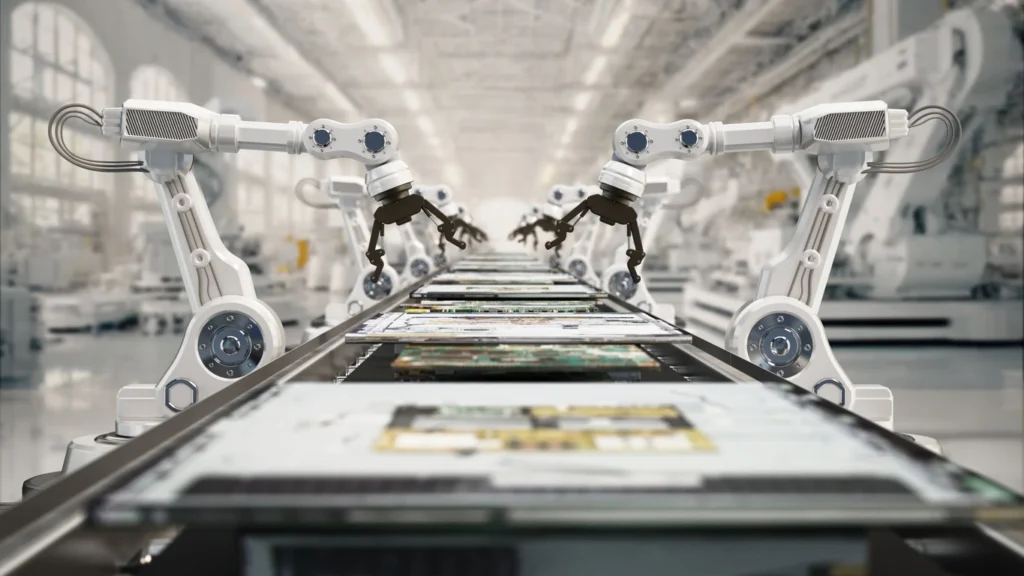
Electronics teams depend on highly localized heating that protects adjacent circuits and sensitive substrates. Himmelwerk’s MHz systems offer controlled, repeatable heat ideal for micro-soldering, assembly, diagnostics, and repair work, delivering the precision required for modern electronic assemblies without risking component damage.
Use Cases
- Micro-soldering & precision joining
- Component-level diagnostics
- PCB repair & rework
Consistent, Clean Heating for Regulated Environments
Medical Devices
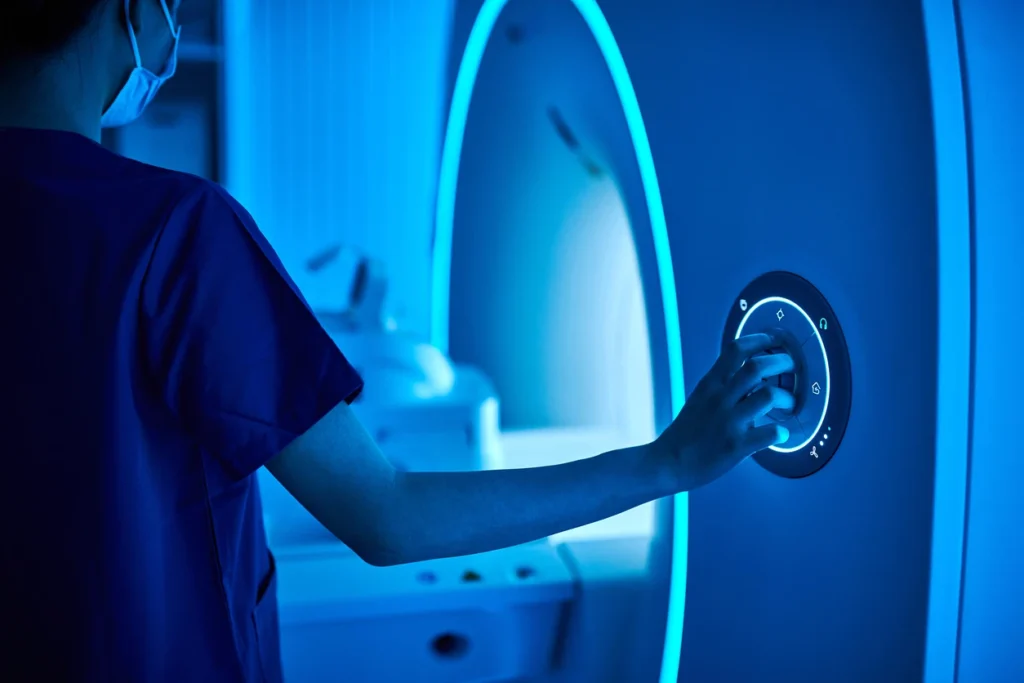
Medical device manufacturing demands tight control, repeatability, and clean heating behavior. Himmelwerk’s MHz systems provide precise, surface-level heat with minimal oxidation. Ideal for bonding, soldering, and assembly processes where predictable, verifiable results are essential for compliance and quality control.
Use Cases
- Precision bonding & joining
- Component assembly for regulated environments
- Micro-soldering for medical electronics
MHz Technology for the World’s Most Sensitive Materials
Semiconductors
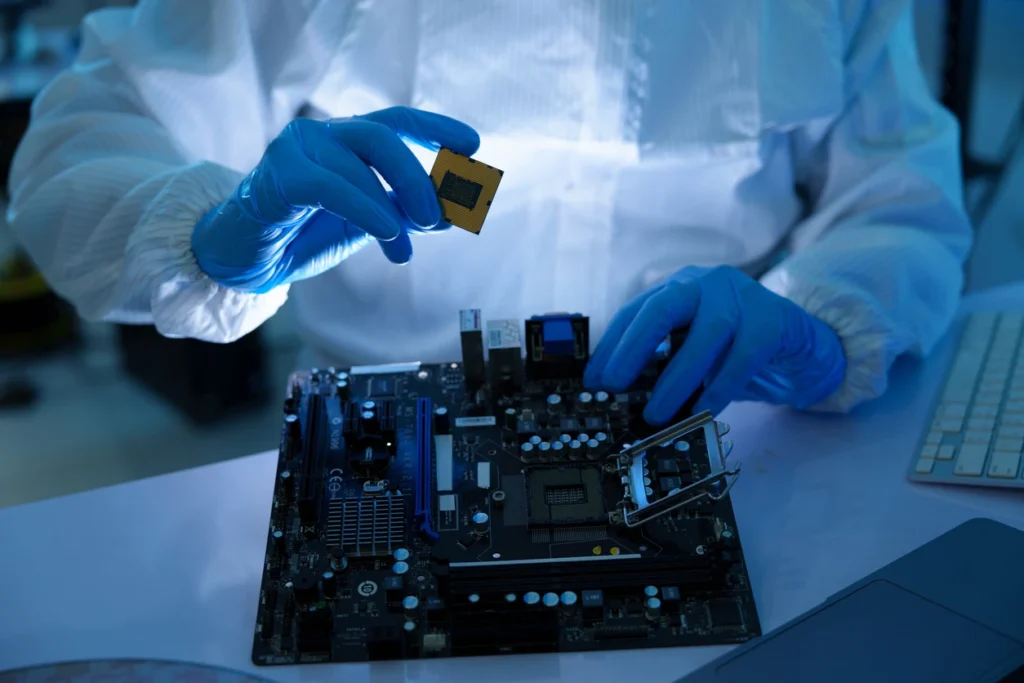
Semiconductor processes rely on localized, contamination-free heat delivery that won’t compromise delicate substrates or microstructures. Himmelwerk’s MHz systems deliver surface-level precision with exceptional stability. MHz systems are perfect for wafer-level work, micro-assembly, cleanroom operations, and thermal processes that require tight, repeatable control.
Use Cases
- Wafer testing & micro-soldering
- Packaging & component assembly
- Cleanroom-compatible thermal operations

Precision Thermal Tools for Prototyping & Component Testing
Automotive R&D
Automotive engineering teams rely on accurate, repeatable heating for validating components, assembling mechanical fits, and performing failure analysis. Himmelwerk’s MHz systems deliver fast, controlled heating cycles ideal for shrink fitting, thermal testing, and rapid iteration throughout prototyping and development workflows.
Use Cases
- Thermal fatigue & durability testing
- Shrink fitting & mechanical assemblies
- Prototyping & component analysis
Reliable Heating for Research, Analysis & Experimentation
Cleanroom Science
Materials science labs depend on stable, measurable heating for testing, characterization, and experimental work. Himmelwerk’s MHz systems provide consistent thermal delivery, tight control, and real-time power monitoring. Our MHz systems are ideal for researchers who require dependable results across repeated trials and varying material compositions.
Use Cases
- Material property testing
- Thermal cycling & controlled experiments
- Research-based prototyping

Get Your Application Specific Solution
Himmelwerk designs each system around your industry’s unique application, materials, and requirements.

Medium frequency
MU series up to 250 kW
MU R series from 10 kW
Inductors
Inductors & External Circuits
Measurement & Monitoring Technology
Spectral Pyrometer
Smart Upgrade
Further induction technology
Cooling Water Recooling Systems
Melting plants